- LED: two 7 × 14 ft side screens plus a 7 × 7 ft rear screen; JPEG or MP4 files; same-day changes; no printing.
- Static: two 10 × 22 ft side banners plus a 3 × 10 ft rear banner; illuminated; one message; printing required.
- Design for a three-second read: about seven words, one idea, high contrast.
- Rule of thumb: 1 inch of letter height for every 10 feet of viewing distance.
- Send LED files 4–8 hours before start so formatting can be checked.
LED vs. static truck specs at a glance
| Spec | Digital LED truck | Static truck |
|---|---|---|
| Side displays | Two LED screens, 7 ft × 14 ft | Two banners, 10 ft × 22 ft |
| Rear display | LED screen, 7 ft × 7 ft | Banner, 3 ft × 10 ft |
| Side shape | 2:1 landscape | About 2.2:1 landscape |
| Content | Video, animation, rotating images, QR codes, countdowns | One printed message |
| Files | JPEG images or MP4 video | Print-ready artwork for vinyl |
| Night visibility | High-brightness HD screens | Illuminated banners |
| Changing the ad | Upload a new file, same day | Print and install a new banner |
| Audio | Exterior speakers on approved campaigns | — |
| Production cost | None for display; you supply digital files | Banner printing |
| Best for | Events, launches, multi-message campaigns, nightlife, daily changes | Multi-day awareness, political, recruiting, grand openings with one message |
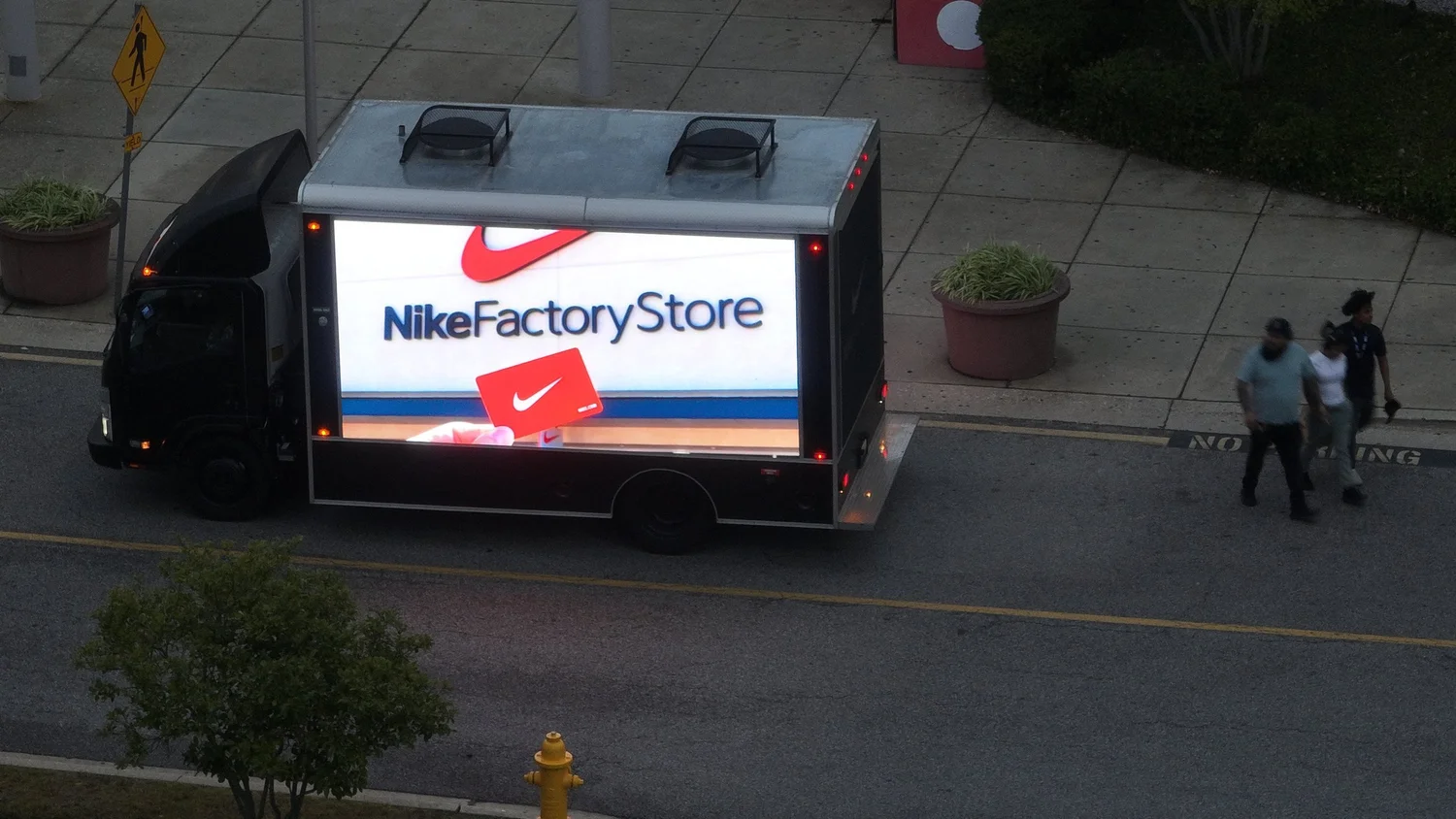
Choose an LED truck when…
- Your message changes by day or hour (sales, countdowns, elections, game days).
- You want motion or video to stop people on a busy street.
- Several brands, products or languages share one campaign.
- Most of the route runs after dark.
- You need to launch fast and can’t wait for printing.
Choose a static truck when…
- One strong message will run for several days or weeks.
- You want the largest single image: a 10 × 22 ft banner on each side.
- Budget per day matters more than flexibility.
- The creative is final and won’t change mid-campaign.
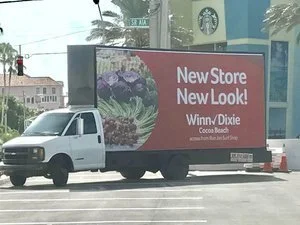
Design rules for ads read at road speed
Most viewers get about three seconds. Design for that.
- About seven words in the headline. One idea per frame.
- Logo, offer, action. Who you are, why it matters, what to do next.
- Size for distance. A common sign-industry rule of thumb is 1 inch of letter height for every 10 feet of viewing distance. To read from 50 feet away, use letters at least 5 inches tall.
- High contrast. Dark on light or light on dark. Avoid thin fonts, script fonts and text over busy photos.
- One phone number or web address, not both. Short, memorable URLs beat long ones.
- Keep important text away from edges so screen frames or banner hems don’t clip it.
- Don’t imitate traffic signals. Flashing red and green patterns can violate local rules.
LED file prep
- Formats: JPEG for still frames, MP4 for video.
- Shapes: build side creative as 2:1 landscape and rear creative as 1:1 square. Ask us for the exact pixel template for your truck before you design.
- Video: make the first second count, and make sense without sound. Audio is available only on approved routes.
- Frame length: hold text-heavy frames longer; viewers need time to read.
- Timing: send final files 4–8 hours before start so the team can check formatting.
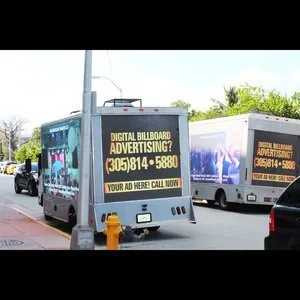
Static banner prep
- Proportions: side banners are 10 × 22 ft; the rear banner is 3 × 10 ft. Design the rear as its own short version, usually logo plus one line.
- Artwork: use vector logos and high-resolution images. Request the printer’s template with bleed and safe zones before you start.
- Lead time: allow extra days for printing and installation.
QR codes on trucks
QR codes work when people are close and the truck is slow or parked. A common rule of thumb is that a code scans from about 10 times its width. A 2-foot code scans from roughly 20 feet. On LED trucks, hold the QR frame longer and use it at events, curbside activations and slow traffic, not on highways.
Common creative mistakes
- Too many words: a full paragraph nobody can read.
- Small logo, big stock photo.
- Low contrast colors that wash out in daylight.
- Missing call to action.
- Rear creative that is just a shrunken side ad.
- Political ads without a boxed disclaimer. See our political guide.
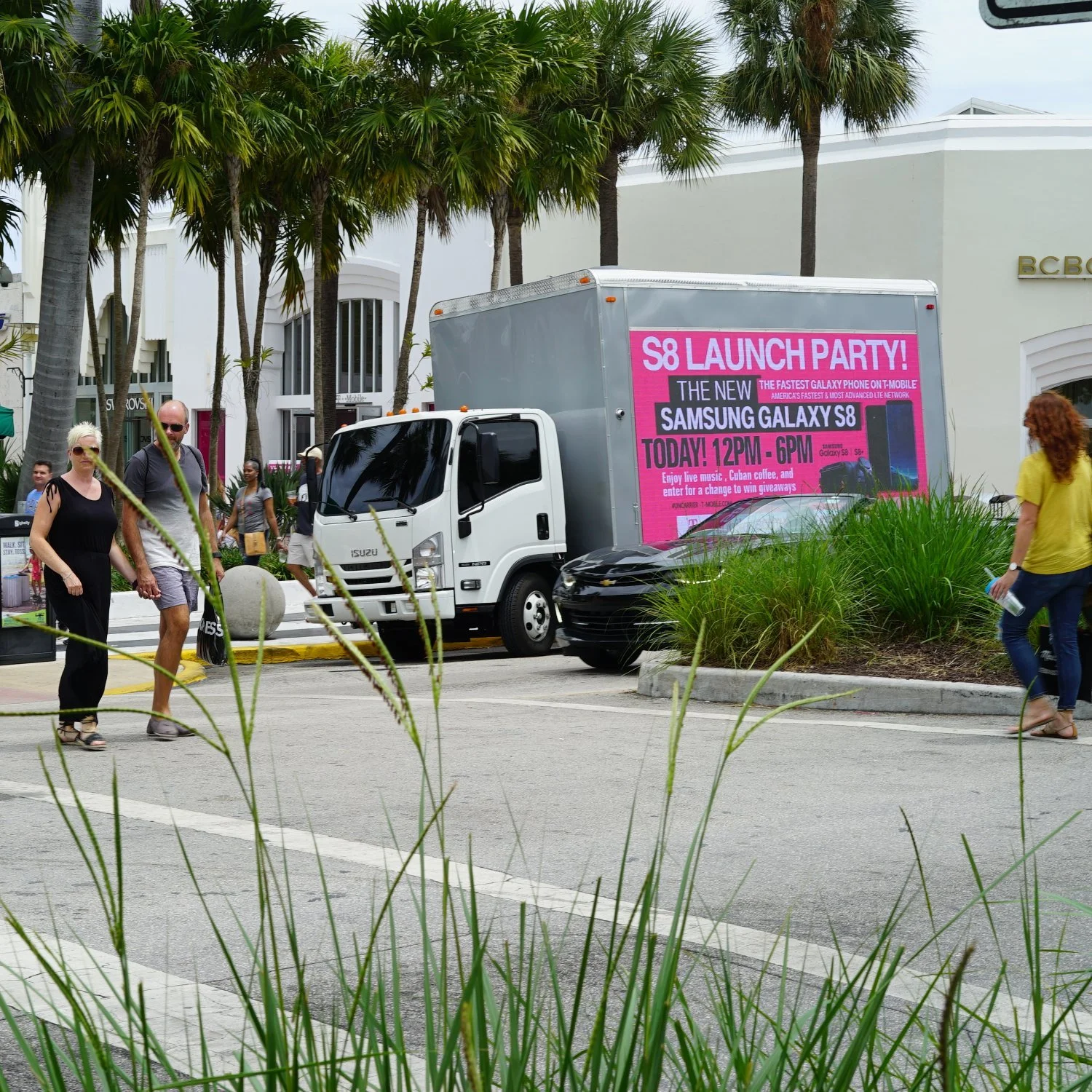
Creative checklist before you send files
- Headline of about seven words.
- Logo readable from 50+ feet.
- One clear call to action.
- High contrast in daylight and at night.
- Correct shape: 2:1 sides and 1:1 rear (LED), or the printer template (static).
- Political disclaimer, if required, on every frame.
- Files sent 4–8 hours before start (LED) or proof approved early (static).
Want to see how creative looks on the street? Browse our campaign gallery, check our services or compare formats by budget in our 2026 cost guide. For measuring what the creative delivers, see how mobile billboard impressions are measured.
Frequently asked questions
What size is a mobile billboard?
Mobile Billboard Global LED trucks have two 7 by 14 ft side screens and a 7 by 7 ft rear screen. Static trucks carry two 10 by 22 ft side banners and a 3 by 10 ft rear banner.
What file types can I send for an LED billboard truck?
JPEG images or MP4 video. Send final files 4 to 8 hours before the campaign starts so the team can check formatting.
Can a mobile billboard show video?
Yes, LED trucks show video, animation and rotating images. Static trucks show one printed message.
Can a billboard truck play sound?
Digital trucks can be equipped with exterior speakers. Audio depends on the route, venue, timing and campaign approval.
How fast can I change the ad on a billboard truck?
On an LED truck, a new file can run the same day. On a static truck, a new banner must be printed and installed.
Is an LED or static truck cheaper?
Static trucks usually have a lower day rate but add printing. LED trucks have no printing cost and give you more flexibility. Our LED campaigns start at about $150 per hour.
About the author: Steven B. is the founder and CEO of Mobile Billboard Global, an Atlanta-headquartered mobile billboard company with 15 years in business, 178 billboard units and more than 34,000 campaign hours completed across U.S. markets. Questions? Call (404) 382-9805 or email Booking@mobilebillboardglobal.com.