- Static bulletins sell in 4-week cycles ($1,500–$30,000) with low CPMs; mobile trucks sell by the hour or day ($800–$3,600 per day).
- Mobile launches in days. Static needs printing, installation and a 4-week commitment.
- Mobile wins when timing and location matter more than raw reach.
- Use a break-even formula, not CPM alone: cost ÷ gross profit per customer = customers needed.
- Measure either format with QR codes, promo codes, tracked phone numbers and branded-search lift.
Mobile vs. static billboards: side-by-side
| Factor | Mobile billboard truck | Static roadside billboard |
|---|---|---|
| How it’s sold | By the hour or day | By the 4-week cycle |
| Typical U.S. cost | $800–$3,600 per day | $1,500–$30,000 per 4 weeks (bulletin) |
| Typical CPM | Higher; depends on route density | About $2–$9 (bulletin) |
| Minimum commitment | A few hours | Usually 4 weeks |
| Time to launch | Days; LED files 4–8 hours before start | Weeks for availability, printing and install |
| Targeting | You choose streets, venues and hours | Fixed location; you get whoever passes |
| Creative changes | Same day on LED trucks | Reprint and reinstall (static vinyl) |
| Proof of delivery | Route report for every hour | Audience estimate for the location |
| Best for | Events, launches, elections, geo-targeting, short bursts | Sustained brand awareness, directional signage |
Cost ranges: AdQuick 2026 billboard cost guide.
What the 2025 market data says
Out-of-home advertising is growing, and digital formats are growing fastest. According to the Out of Home Advertising Association of America (OAAA):
- U.S. out-of-home revenue hit a record $9.46 billion in 2025, up 3.6%.
- Billboards were 71.1% of that spend, about $6.72 billion.
- Digital out-of-home grew 10.5% and made up 36.3% of total revenue.
Advertisers are not choosing one format over the other. They are adding flexible, digital, time-specific placements on top of traditional boards.
How to calculate ROI for either format
Start with break-even, then measure. CPM tells you what attention costs. Break-even tells you whether the campaign can pay for itself.
Break-even customers = campaign cost ÷ gross profit per new customer
Example (illustrative): a restaurant books a 2-day LED truck campaign at about $2,800. Each new customer is worth about $40 in gross profit over their first few visits.
$2,800 ÷ $40 = 70 new customers to break even.
Compare: a $4,000 static board for 4 weeks needs 100 new customers at the same value.
Then ask which format is more likely to produce those customers in your situation. A truck circling the opening-week neighborhood at lunch has a clear path to 70 visits. A highway board 10 miles away may not.
Full ROI = (gross profit from attributed customers − campaign cost) ÷ campaign cost.
When a static billboard wins
- You need months of steady awareness in one market.
- You want directional signage: “Exit 12, next right.”
- The audience is broad, like a regional bank or hospital system.
- Lowest possible CPM matters more than precision.
When a mobile billboard wins
- The campaign has a date: an opening, event, sale, election or launch.
- The audience gathers in specific places: stadiums, conventions, campuses, nightlife, like the districts in our Atlanta route guide.
- You need to launch this week, not next month.
- You want to change creative by day or daypart (see LED vs. static trucks).
- You want to cover several neighborhoods or cities with one asset.
- You want to show up outside a competitor’s location or a trade show you didn’t buy into.
The combo play: static anchor, mobile surge
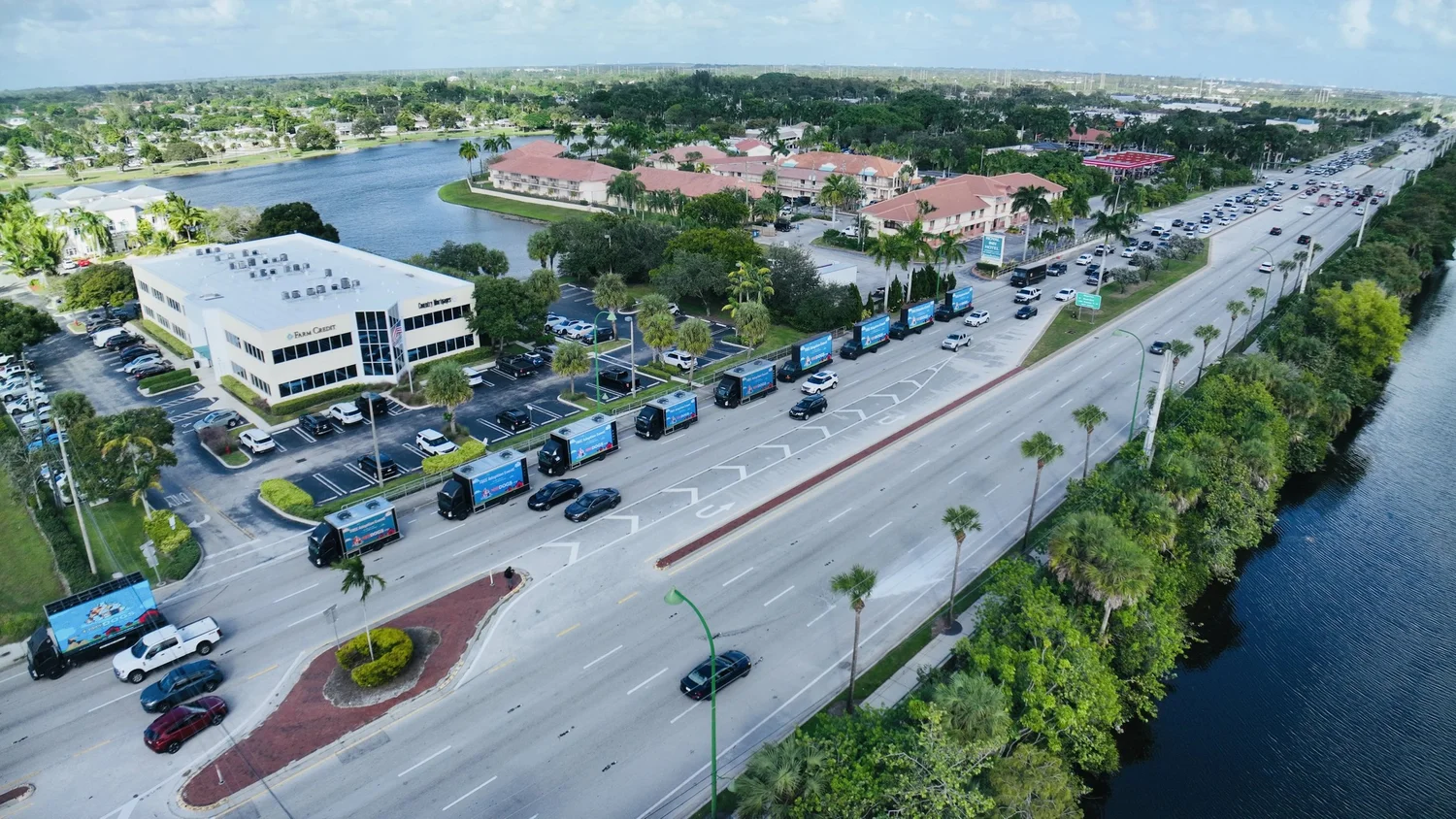
Use a static board for always-on presence and mobile trucks for the moments that spike demand. A personal-injury firm, for example, can hold a highway board all year and add trucks on game days and holiday weekends. A retailer can keep a board near the store and send a truck through surrounding neighborhoods during opening week.
How to measure results from either format
- QR codes with UTM tags so scans show up in your analytics. Best for parked or slow-moving moments.
- A unique promo code that appears only on the billboard.
- A tracked phone number printed only on the billboard creative.
- Branded-search lift. Compare branded search clicks in Google Search Console for the campaign window vs. the prior period.
- Foot traffic and sales by day, compared with the same days in prior weeks.
- Route reports (mobile) matched against sales by ZIP code or neighborhood. See how mobile billboard impressions are measured.
Our 2026 cost guide shows how to turn a quote into CPM, and our earlier comparison covers mobile billboards vs. bus transit advertising.
What we see after 15 years
Across more than 34,000 campaign hours, the strongest mobile results come from campaigns with a time-bound reason to act: an opening day, a game, a sale ending Sunday, an early-voting deadline. When the message has no deadline and the goal is year-round awareness, we often tell clients a fixed board, or a fixed board plus a few truck days, is the better buy.
Frequently asked questions
Is a mobile billboard cheaper than a static billboard?
Per day, a static board is usually cheaper, and its CPM is lower. But a static board is sold in 4-week cycles, while a truck can be booked for a few hours or a single day, so a short mobile campaign often costs less in total.
Which has better recall, mobile or static billboards?
Mobile billboards are often promoted with high recall figures, but most of those numbers come from older industry studies whose methods aren’t public. Measure your own results with promo codes, QR scans and branded-search lift.
Can I change the message on a billboard truck?
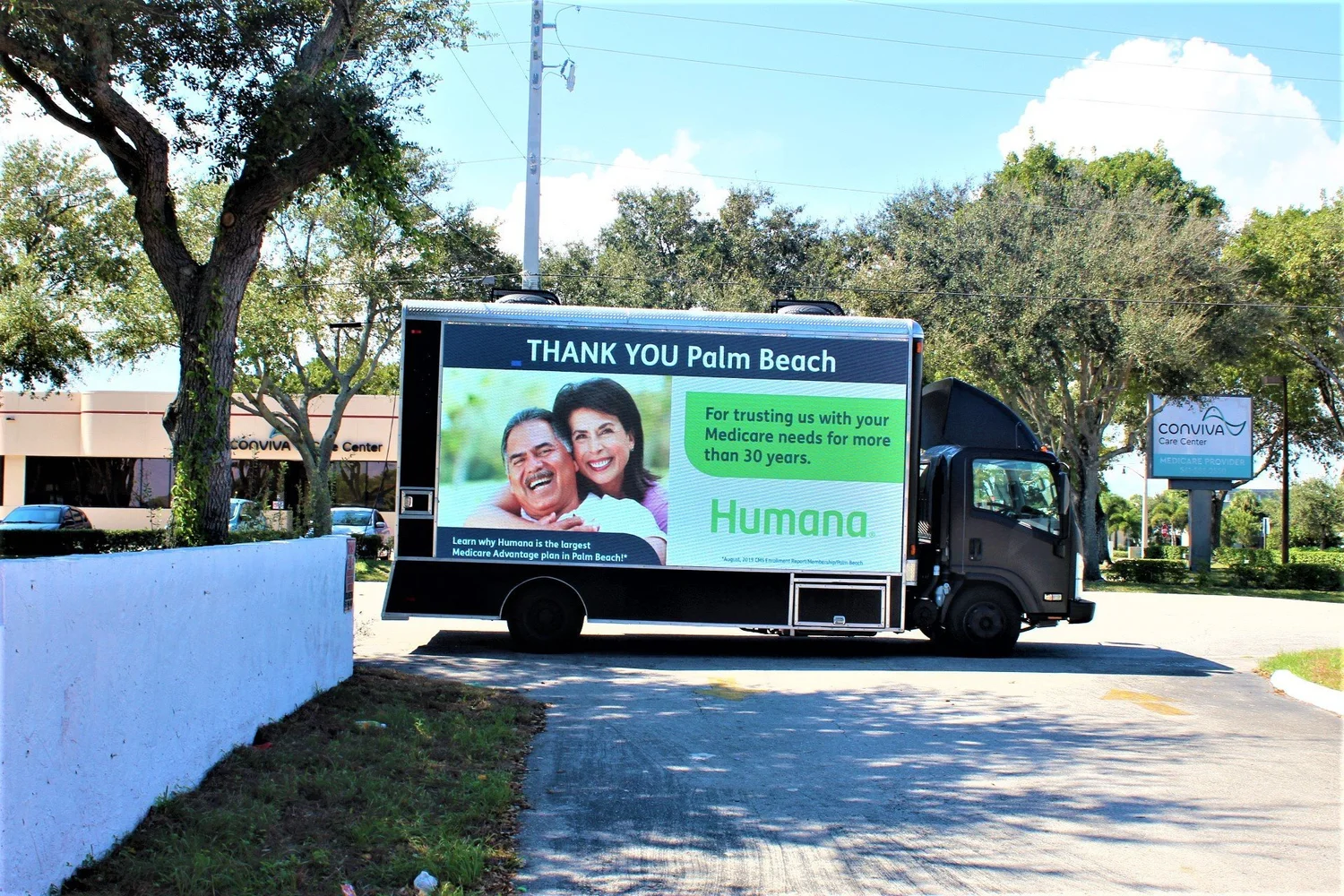
Yes. LED trucks accept new JPEG or MP4 files and can run them the same day. Static trucks and static roadside billboards require new printed vinyl.
How long should a mobile billboard campaign run?
Match it to the reason to act. One day works for an opening or event; several days to a few weeks works for launches, elections and seasonal promotions.
Can I rent a static billboard for one week?
Most static roadside billboards are sold in 4-week cycles. If you need one day or one week, a mobile billboard is usually the more practical option.
About the author: Steven B. is the founder and CEO of Mobile Billboard Global, an Atlanta-headquartered mobile billboard company with 15 years in business, 178 billboard units and more than 34,000 campaign hours completed across U.S. markets. Questions? Call (404) 382-9805 or email Booking@mobilebillboardglobal.com.